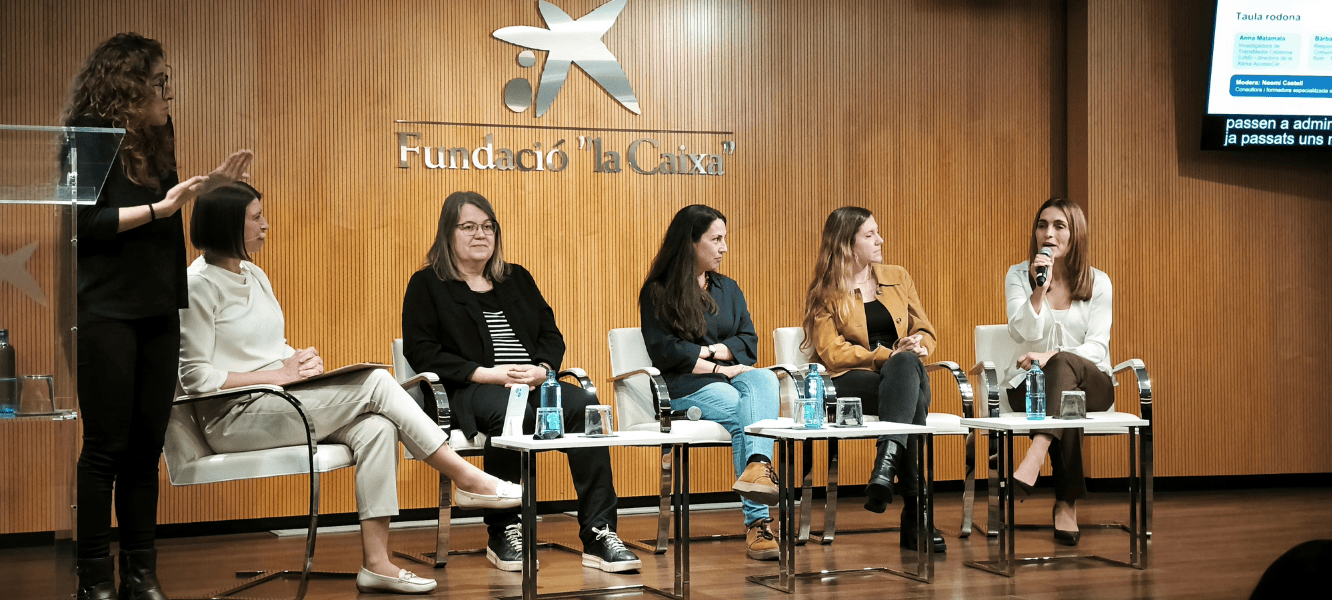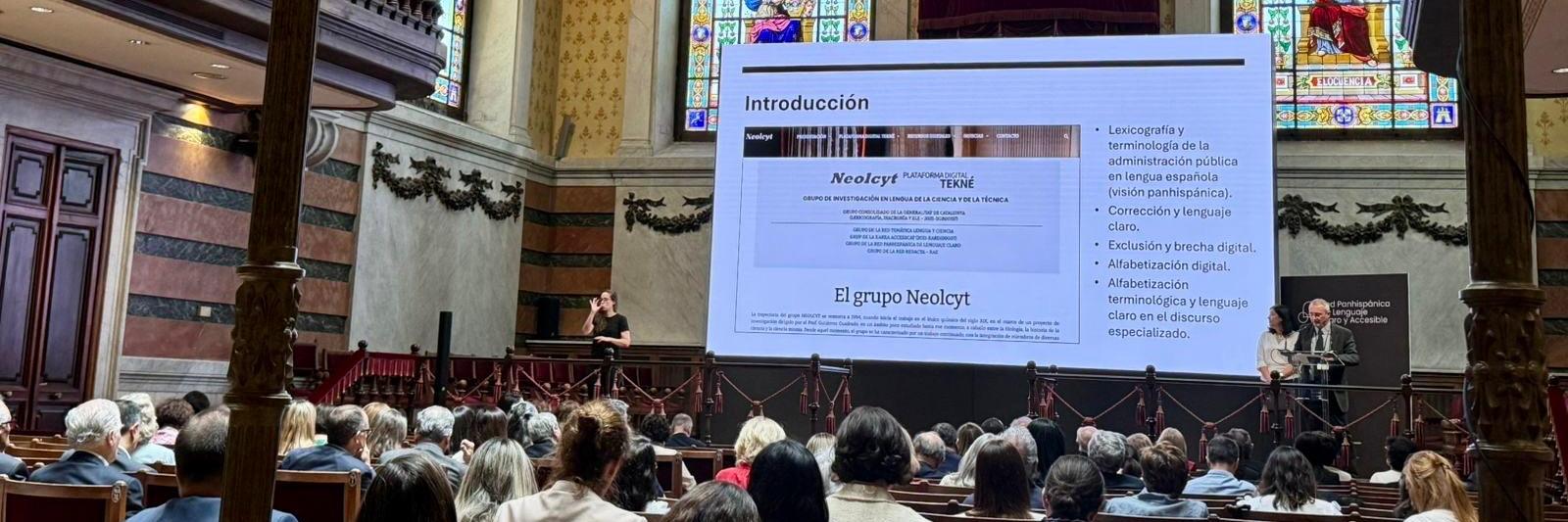
The event, organised by the Catalan Coordinator of Foundations (CCF), brought together over one hundred participants.
On 19 March, the Catalan Coordinator of Foundations (CCF) organised the event “How can I make my organisation more inclusive and accessible? Challenges, best practices and legal frameworks to remove physical, sensory and cognitive barriers.” The morning featured debates, talks, and presentations, bringing together more than 100 professionals, third-sector organisations, and expert voices in accessibility, rights, and full participation.
Anna Matamala, director of the AccessCat Network, was one of the invited speakers. She used her intervention to highlight the accessibility work carried out within the Network, as well as the importance of implementing easy-to-read content and clear communication. This area of research is being explored within the TransMedia Catalonia research group through projects such as ENACT and WEL. The CCF highlighted the phrase “people-centred research gives us tools to make communication more accessible” as a key takeaway from her talk.
Two affiliated entities from the Network also took part in the event: Dincat and Som – Fundació. Luciana Burin, from Dincat, stressed that “cognitive accessibility is no longer desirable but mandatory” and that “accessibility benefits not only a specific group, but society as a whole”. Meanwhile, Bárbara Fernández, from Som Foundation, emphasised the need for user validation, describing it as an “essential step to ensure accessibility”.
The event concluded with a closing keynote by Josep Maria Ganyet, a computer engineer specialising in artificial intelligence. In his final talk, he presented the SignarIA project, which aims to include deaf signers in radio and audiovisual contexts, and in which researchers from the LSC Lab research group within the Network have collaborated.