Developed by researchers from UPF and the technology consultancy Sorensen, the tool will enable new ways of accessing radio.
Providing deaf signers with more opportunities to participate in radio was the challenge that emerged at Universitat Pompeu Fabra and which has materialized in SignarIA, thanks to collaboration betweenresearchers and experts from the technology consultancy Sorensen.
This project gives deaf signers a personalised radio identity. This is achieved by combining the individual’s latent vocal imprint with a voice donor, typically a family member or someone from their environment with a similar age and gender. In this way, a new personalised voice is created that matches the characteristics of the deaf signer, without resorting to generic synthetic voices lacking personality.
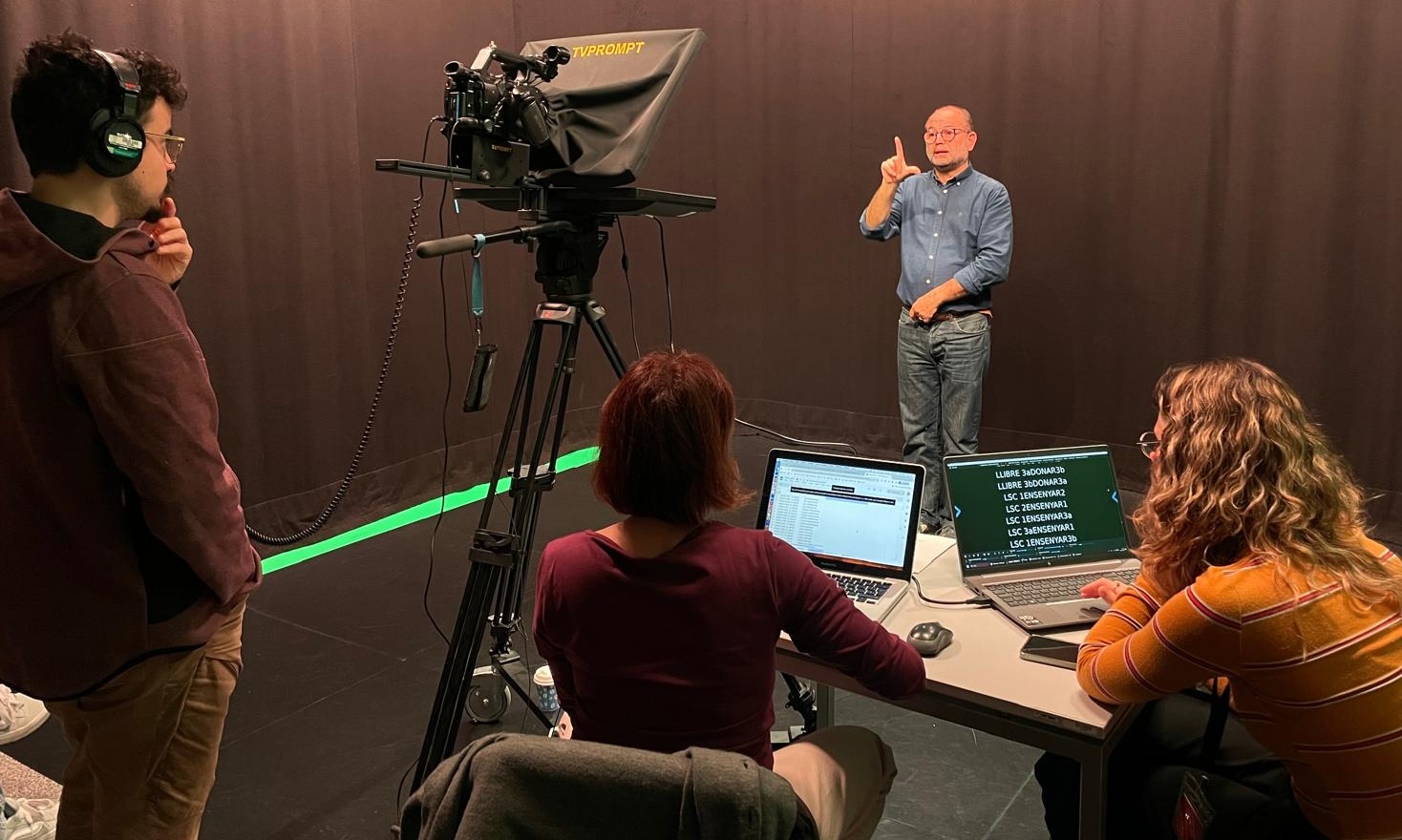
Broadly speaking, the tool offers several functions to facilitate participation in radio. First, context and questions are input and converted into speech. When improvisation is required, artificial intelligence captures Catalan Sign Language (LSC) and translates it into speech. In these cases, SignarIA provides several sentence options to ensure the output matches the intended message.
In short, SignarIA aims to break “the structural barrier of radio as an exclusively auditory medium” and make it possible “for sign language users to have a direct presence”, explain the project’s creators. However, it is not intended to replace live interpreting: “the deaf community already has a voice, sign language. In the focus groups, participants told us they saw it as a useful tool for breaking barriers in spaces where deaf signers were not used to participating, but only if they could choose to complement it with an interpreter”, explains one of the researchers involved, Gemma Barberà, from LSC Lab, research group affiliated with the AccessCat Network.
The project originated in the classroom in response to a deaf Journalism student’s need to take a radio course. She wanted to participate on equal terms with her peers, which led the UPF Faculty of Communication to launch a multidisciplinary research process to develop a solution.
The LSC Lab research group highlights that their involvement in the project has enabled them to develop new know-how, as well as generate a large amount of open-access data that will advance research in LSC. At the same time, many people have shown interest in the project and have taken part as voice donors, which will also help build useful datasets for research.
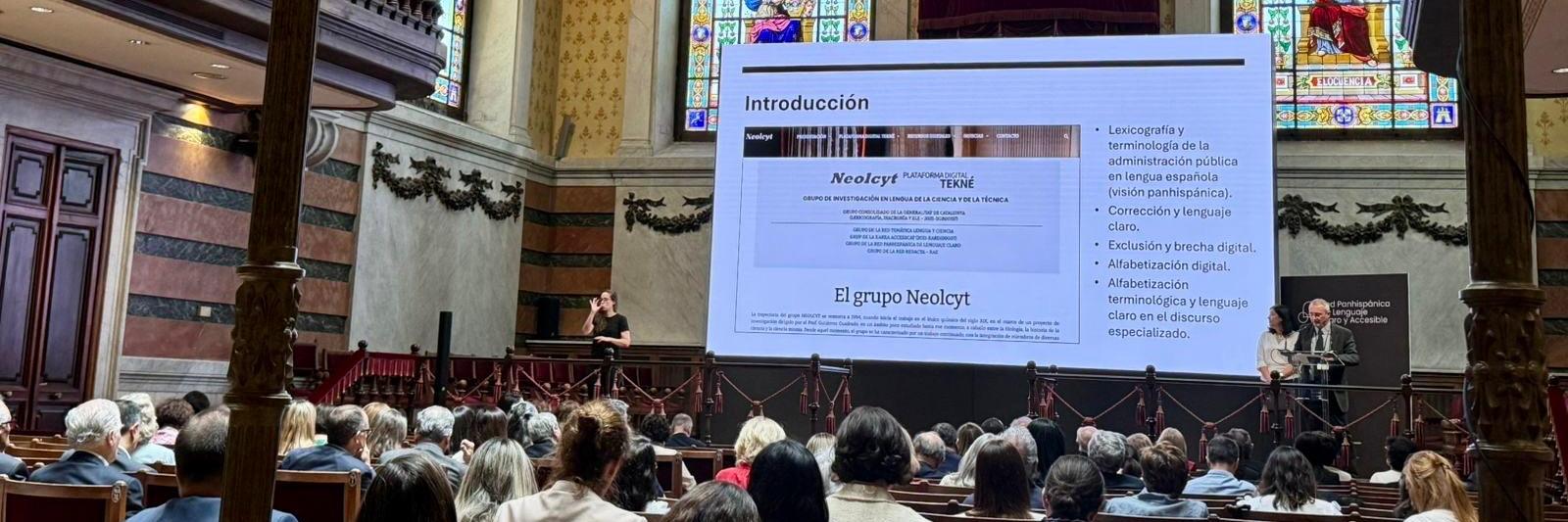
The tool, currently in prototype form, was presented on 17 March at the Pompeu Fabra University. Read more about the launch event.